
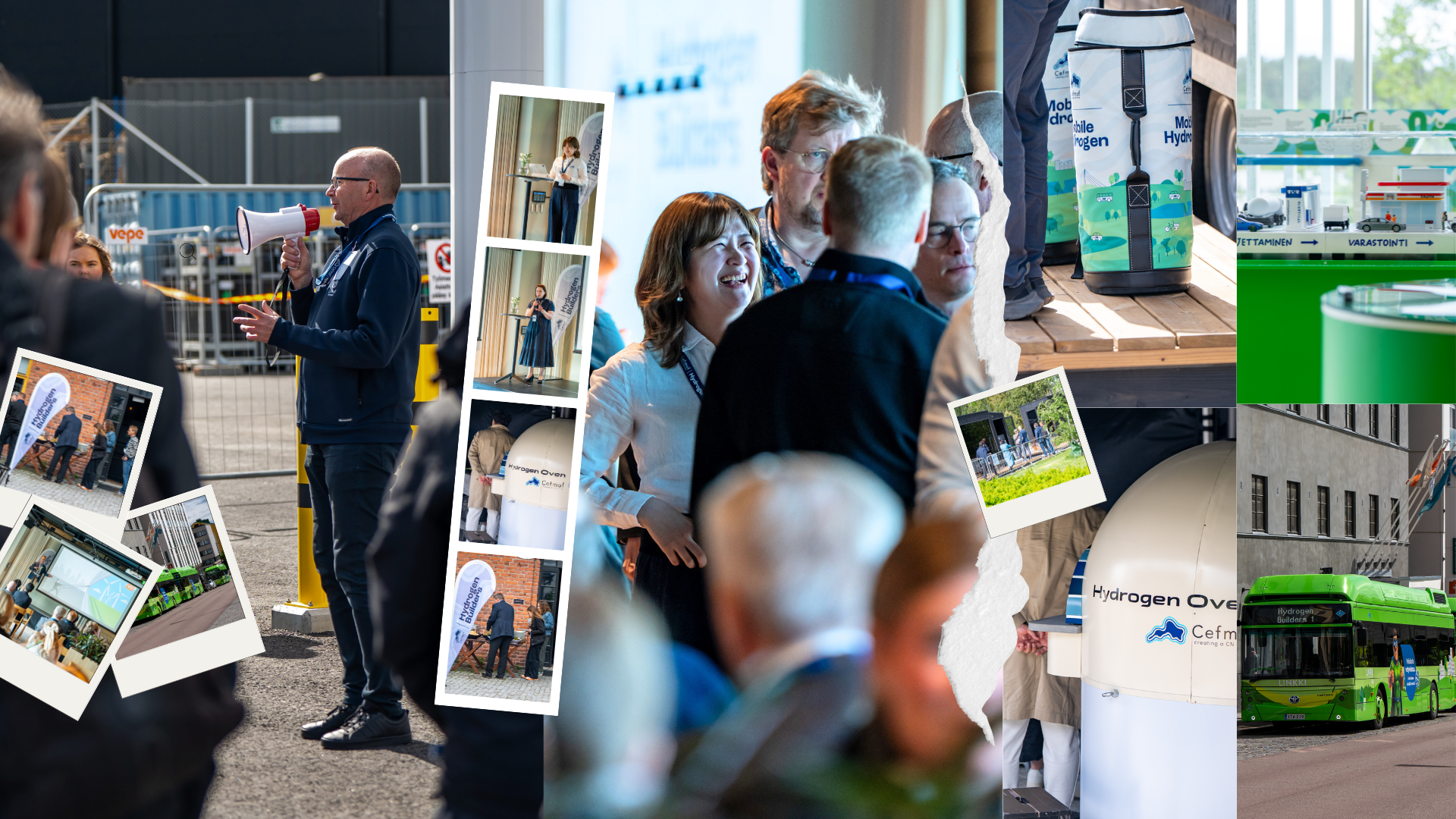
Hydrogen Builders brought together hydrogen developers, companies, cities, and research organisations in Jyväskylä to discuss where the hydrogen economy is heading and what comes next. Throughout the day, one message emerged consistently: hydrogen is no longer just a future opportunity. It is becoming a practical solution that is being tested, deployed, and scaled across different sectors and regions.
The event theme, “From Plans to Real Life”, perfectly captured the current stage of the hydrogen economy. The focus is shifting from planning to implementation.
Practical applications are taking centre stage
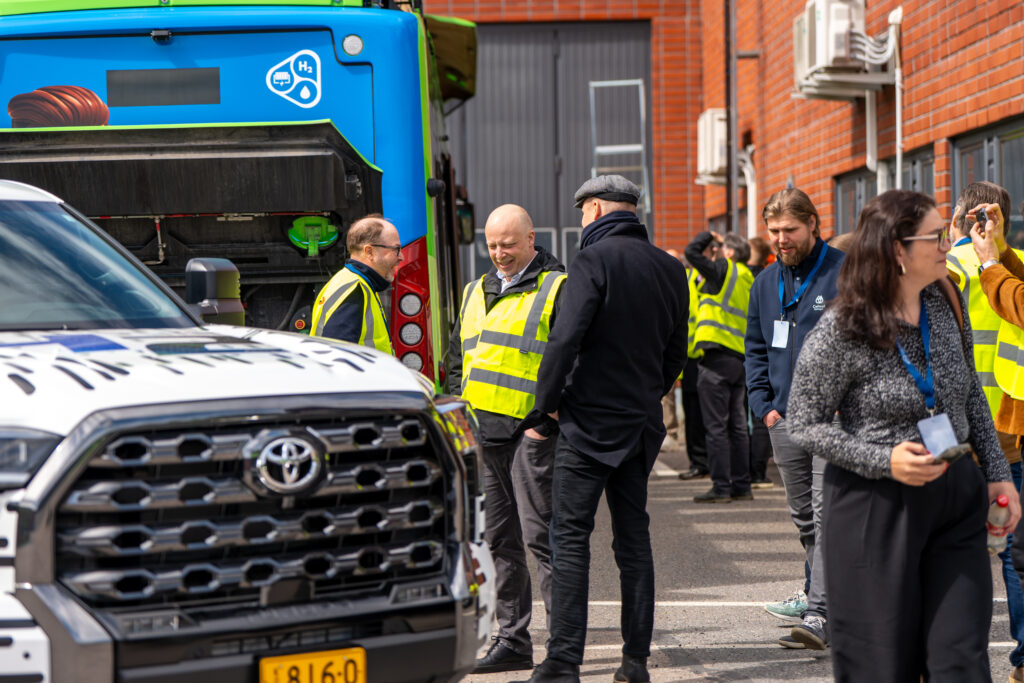
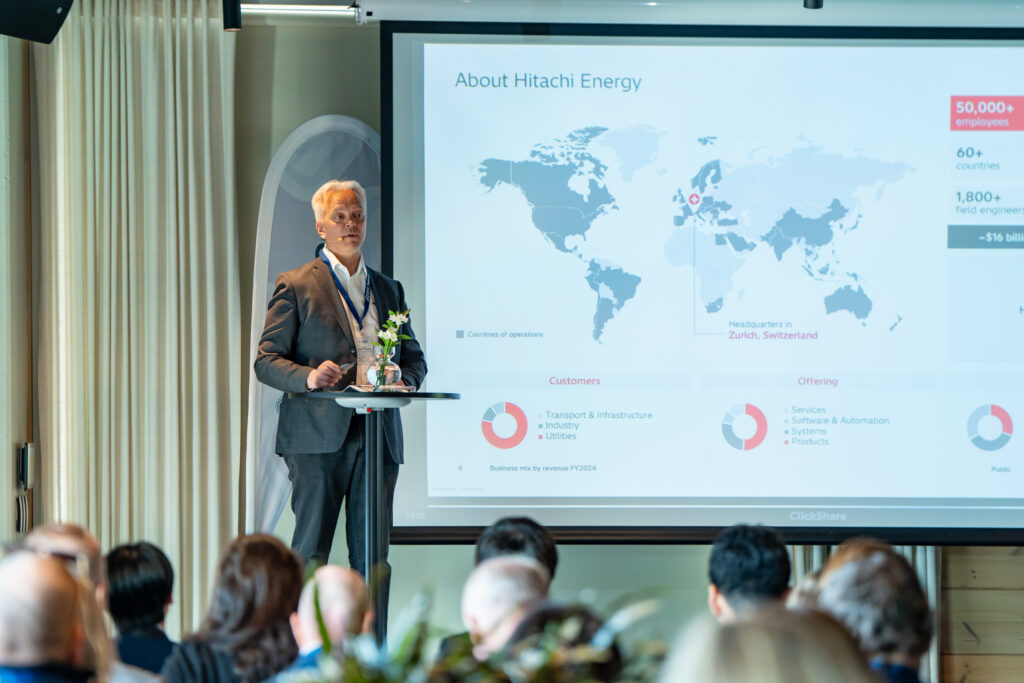
The development of the hydrogen economy is particularly visible in sectors where direct electrification remains challenging. Hitachi Energy and P2X Solutions presented a solution that uses green hydrogen to provide emission-free electricity for construction sites, events, and other locations where access to the power grid is limited.
The HyFlex Hybrid Flexible Energy Hub combines fuel cells, battery storage, and energy management into a mobile solution that can replace diesel generators. At the same time, P2X Solutions is building the green hydrogen value chain from production to logistics. The presentation demonstrated how hydrogen solutions can already deliver measurable emission reductions today, without waiting for future market developments.
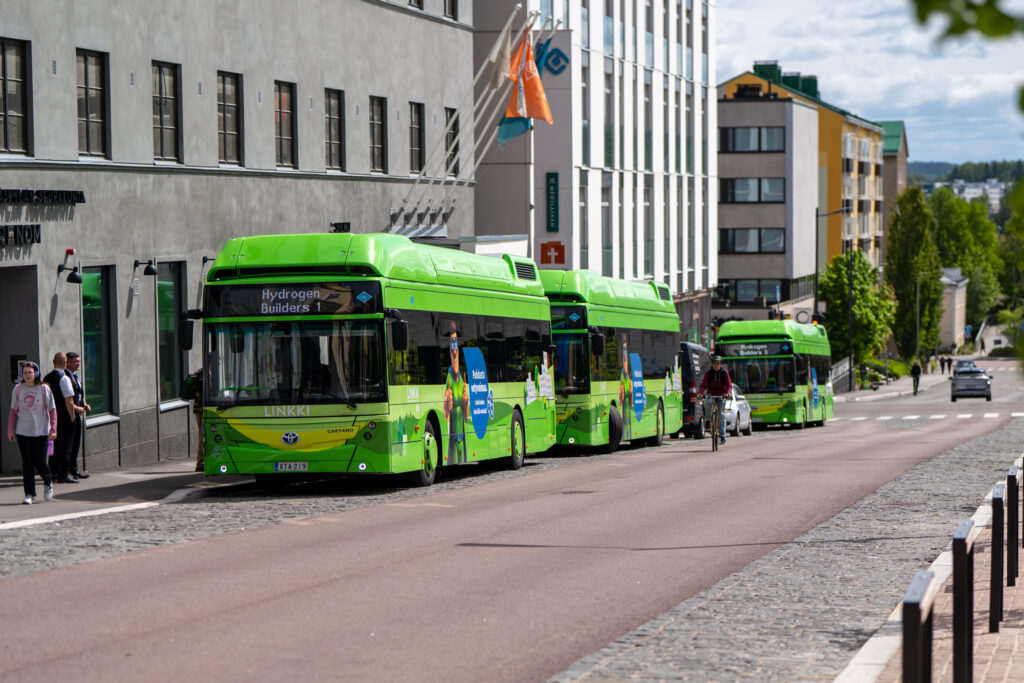
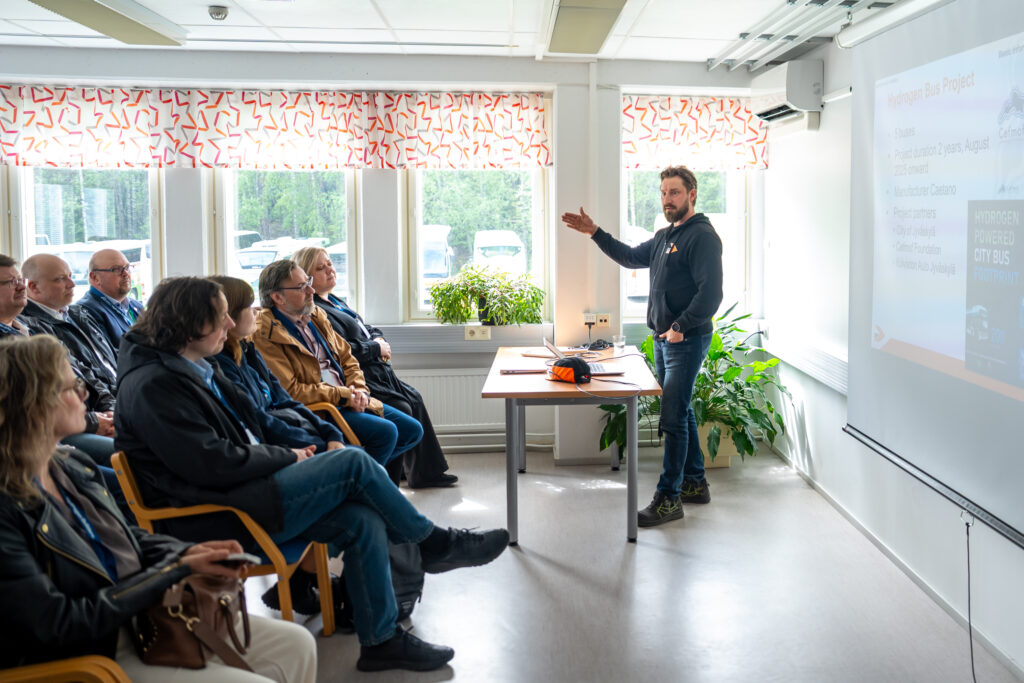
In transport, the discussion has also moved beyond proof-of-concept projects. Koiviston Auto shared experiences from Finland’s first hydrogen buses. The focus has shifted from commissioning vehicles to collecting operational data, testing performance in winter conditions, optimising refuelling procedures, and developing maintenance practices.
The key question is no longer whether the technology works, but how operations can be improved and expanded into new applications.
Distribution and refuelling will determine the next phase of growth
Several presentations highlighted that while hydrogen production technologies continue to advance rapidly, infrastructure remains one of the most significant bottlenecks.
Bosch Rexroth focused on hydrogen refuelling infrastructure, particularly compression and distribution technologies. The future hydrogen economy will require solutions that enable fast, reliable, and cost-efficient refuelling for both gaseous and liquid hydrogen.
In practice, this means that the next phase of hydrogen development is less about whether hydrogen can be produced and more about how efficiently it can be delivered to end users.
Cities provide platforms for innovation
The City of Jyväskylä demonstrated how cities can serve as real-world environments for testing and developing new energy solutions. The city’s hydrogen programme for 2025–2027 focuses on distributed hydrogen production, mobility applications, and the development of an innovation ecosystem.
The objective is to create projects that allow new technologies to be tested in practice and accelerated towards commercial deployment.
Collaboration with organizations actively involved in hydrogen initiatives, such as Toyota, the H2 Innovation Alliance, and various pilot and development projects, demonstrates how cities can provide platforms for innovation, experimentation, and market creation.
International examples demonstrate increasing scale
A presentation from Yamanashi Prefecture in Japan offered a glimpse into what the next phase of the hydrogen economy may look like. The region has developed a Power-to-Gas ecosystem where renewable electricity is converted into green hydrogen and utilised in industry, transport, and energy applications.
The 16 MW Power-to-Gas facility at Suntory’s Hakushu site produces approximately 2,200 tonnes of green hydrogen annually. The hydrogen is used in industrial heat processes, metal manufacturing, and mobility applications.
The Yamanashi example demonstrated that the hydrogen economy is moving beyond isolated pilot projects towards integrated regional value chains where production, logistics, and end-use applications form a functioning ecosystem.
The hydrogen economy requires multiple technologies
AGCO reminded participants that there is no single solution for the energy transition in agriculture or heavy-duty machinery. Battery-electric systems, biomethane, fuel cells, hydrogen combustion engines, and hybrid solutions are all developing in parallel, with the most suitable option depending on the application.
The company’s fuel cell and hydrogen engine demonstrations showed that hydrogen can offer a viable alternative in applications where long operating hours and high-power demands remain challenging for battery-electric solutions.
VTT also emphasised the importance of viewing hydrogen as part of a broader energy system. Hydrogen, electrification, energy storage, carbon utilisation, and industrial processes must work together if solutions are to become genuinely competitive.
The hydrogen economy is now evolving from its early excitement phase towards controlled scaling, where collaboration between research organisations, industry, and public-sector actors becomes increasingly important.
Progress continues despite uncertainty
While many of the presentations highlighted concrete examples of hydrogen deployment, Helen’s presentation provided an important market perspective on the current stage of the hydrogen transition.
Over the past few years, the hydrogen sector has moved from a period of strong expectations to a phase where projects are being evaluated more carefully from business, technology, and market perspectives. Across Europe, several ambitious hydrogen projects have been delayed, scaled down, or reassessed due to changing market conditions, investment costs, and regulatory uncertainty.
Despite these challenges, Helen’s message remained optimistic. Although progress may not be moving as quickly as many predicted a few years ago, the foundations of the hydrogen transition continue to be built. Pilot projects, demonstrations, and real-world experience are creating valuable expertise and capabilities that will support future investments.
Building a hydrogen-based future requires patience, resilience, and a willingness to learn along the way. This “learning by doing” mindset was a recurring theme throughout the event and an important reminder that long-term progress is often built through practical experience rather than rapid breakthroughs.
Time for the builders
Perhaps the most important takeaway from Hydrogen Builders was that the hydrogen economy cannot be built by individual organisations alone. Progress requires companies, research institutions, public authorities, and practitioners who are willing to share experiences, learn from one another, and develop solutions together.
This spirit was clearly visible throughout the event. Conversations continued long after the presentations had ended, in networking sessions, around coffee tables, and in the hallways. It was encouraging to see how openly participants shared both successes and challenges. The shared understanding was clear: advancing the hydrogen economy is a collective effort.
The mission of Cefmof is to act as an enabler and a convening force in this development. The hydrogen economy requires more than technology and investments. It also needs places where people can meet, exchange ideas, and discover new opportunities for collaboration. Hydrogen Builders was created with exactly this purpose in mind.
The strong participation, active discussions, and positive atmosphere demonstrated that there is a clear need for such a platform. The willingness to collaborate is already there. Sometimes what is needed is an organisation willing to bring people together.
This year, Cefmof’s Hydrogen Builders provided that platform. We look forward to doing it again next year.
Article by: Suvi Vuojolainen, Communications Director, Cefmof
