
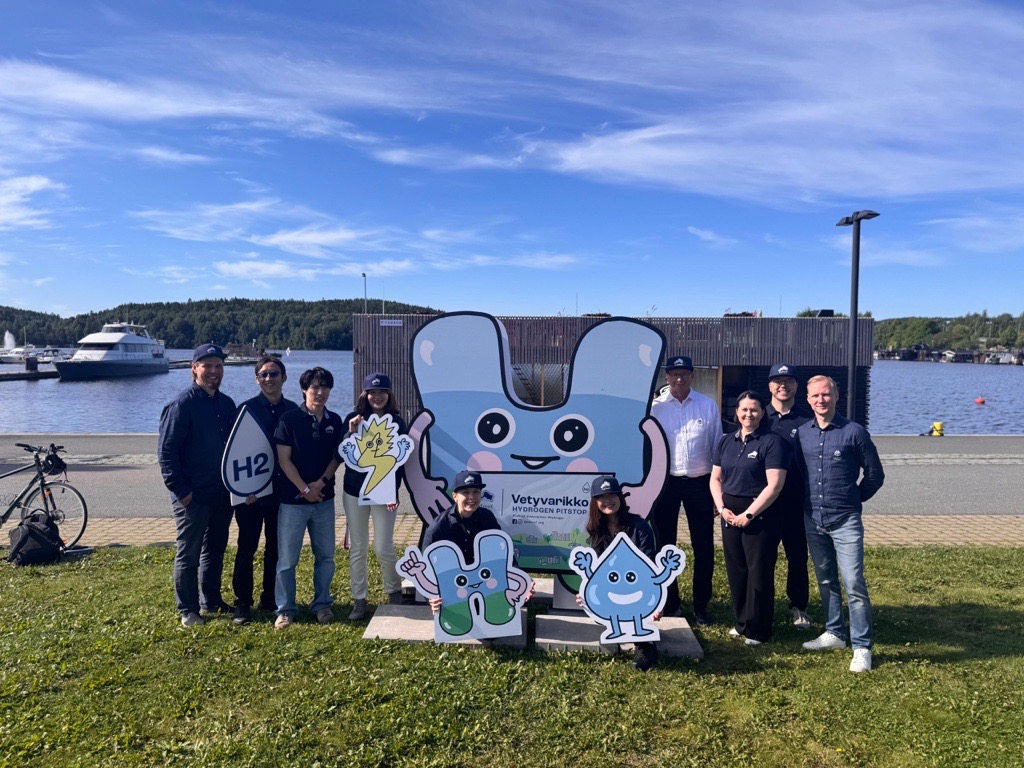
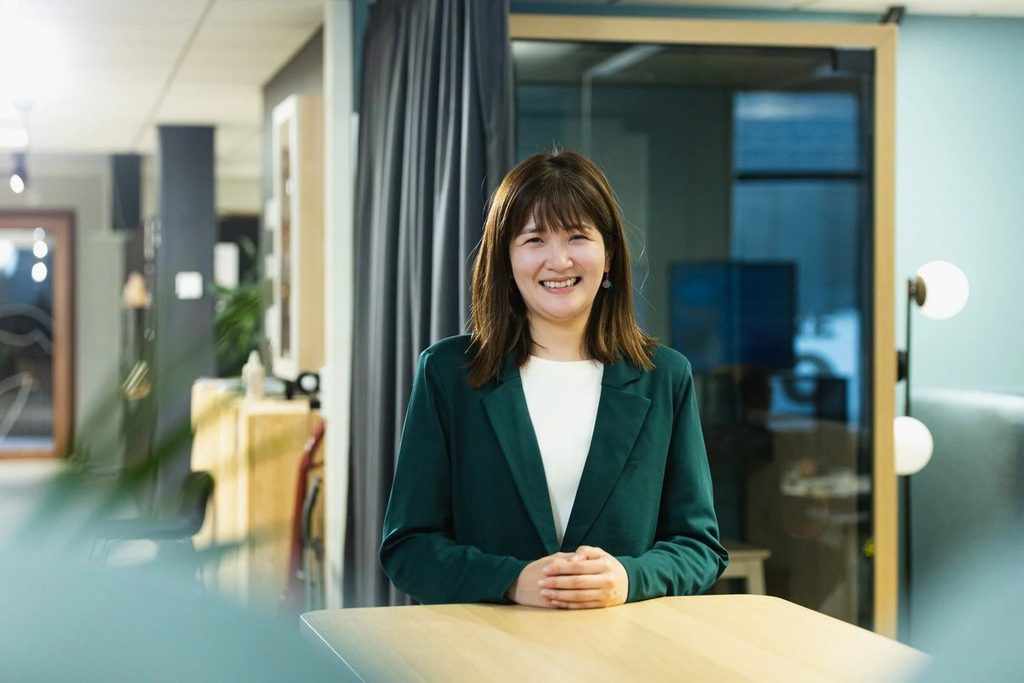
What is it like to work in an organisation where Finnish and Japanese work cultures meet every day? Haruka Arai, Executive Director of Cefmof, and Suvi Vuojolainen, Communications Director, share their experiences of cultural differences and what working in a multicultural team can offer.
“Would you like to come to Finland?”
Haruka Arai’s journey from Japan to Finland began with an unexpected phone call from a former colleague she greatly respected.
“He casually asked me if I would like to come to Finland.”
Arai had previously visited Helsinki and formed a positive impression of Finland. Before making her decision, she also visited Jyväskylä. The warm welcome she received from the people she met left an impression, but what excited her most was the opportunity to help build an entirely new organisation.
Nearly three years later, Arai still finds it remarkable how a single phone call changed her life.
Moving from Tokyo to Jyväskylä initially required some adjustment to a quieter pace of life. However, settling in was easier than expected. Jyväskylä offers everything needed for everyday life, and getting from one place to another takes considerably less time than in Tokyo.
Arai particularly enjoys being close to nature and having more free time. Walks along lakeshores and in national parks with the dog she brought from Japan have become a favourite way to spend time together.
“Compared with life in Tokyo, we have more time together and more places to explore. I think even my dog’s quality of life has improved!”
From working hours to how we say no
At Central Finland Mobility Foundation (Cefmof), Finnish and Japanese work cultures meet every day. The foundation develops and tests solutions related to sustainable mobility and urban development, with international cooperation playing a central role in its activities.
Cultural differences are also visible in everyday working life.
One of the things that surprised Arai most about Finnish working culture was how early people leave work. In Japan, employees may hesitate to leave while their colleagues are still working. In Finland, the end of the working day generally means it is time to go home.
According to Arai, this does not reflect a lack of commitment, but rather a different approach to balancing work and personal life. She also appreciates the relatively flat hierarchy of Finnish workplaces, where people can express their opinions regardless of their position or age.
Suvi Vuojolainen, Communications Director at Cefmof, has noticed differences particularly in communication styles.
“In Finland, we are accustomed to fairly direct communication. Working with my Japanese colleagues has taught me that things can also be expressed more subtly. For example, instead of giving a direct negative answer, someone might suggest an alternative way forward.”
What Vuojolainen particularly appreciates about Japanese communication culture is the way differing opinions can be expressed while showing respect for others. At the same time, there are situations where Finnish directness is useful.
“What matters is finding the right way to communicate in each situation. Direct communication can also be respectful.”
When trust speaks different languages
One interesting difference Vuojolainen has noticed concerns the frequency and nature of communication during work.
While sharing progress, consulting colleagues and keeping others informed are familiar practices in Finnish workplaces too, working with her Japanese colleagues has introduced Vuojolainen to a somewhat different rhythm of communication, with more frequent updates and ongoing coordination.
This approach is reflected in the Japanese principle of hōrensō, which refers to reporting, keeping others informed and seeking advice.
“When I first joined Cefmof, I was sometimes surprised by how frequently we shared updates on the progress of our work. Over time, I have come to understand that this is not about a lack of trust, but rather a different way of ensuring that everyone stays informed and aligned,” Vuojolainen explains.
Arai has also observed differences in communication styles. In her experience, Finnish communication tends to be more direct, while careful coordination and understanding what is left unsaid are often important aspects of communication in Japan.
Adapting to different ways of working takes time, but both see these differences as an opportunity to learn from each other. They have also found much in common, particularly in the appreciation of reliability, responsibility and the quality of work.
Neither Finnish nor Japanese, but something shared
At Cefmof, shared ways of working have largely developed through everyday collaboration. Each person brings not only their cultural background but also practices learned in previous workplaces.
Cefmof’s founding organisations also influence its working culture. For example, the learning-by-doing approach associated with Toyota’s working culture can be seen in the foundation’s practical development projects. Everything does not need to be finalised before work begins. Instead, solutions can be tested and improved based on experience.
The team’s shared working language is English, which is not the native language of either its Finnish or Japanese employees.
“This can actually make it easier to use English, because no one needs to aim for perfection. What matters most is creating an atmosphere where people feel comfortable saying when they haven’t understood something,” Vuojolainen says.
Arai has also found that it is easy to manage in Finland using English. However, she believes that even a basic knowledge of Finnish would help her build closer relationships with local people and participate more actively in the surrounding community.
From Central Finland to the world, and from the world to Central Finland
According to Vuojolainen, one of the greatest strengths of a multicultural workplace is how it challenges familiar ways of thinking and working, often almost without anyone noticing.
“When people look at things from different perspectives, new ideas and solutions emerge.”
This is particularly valuable at Cefmof. International cooperation brings together expertise developed in different countries, which can be used to develop and test new solutions in Central Finland. At the same time, the work carried out locally generates experience and knowledge that may also benefit others elsewhere in Finland and internationally.
Multiculturalism is also an advantage in communications. Different perspectives help the organisation explain its work clearly to different audiences. Through international partners, the work being done in Central Finland and the region’s expertise also gain visibility around the world.
“To me, one of the best things about Cefmof is exactly this: we do very practical things locally, but our cooperation and its impact extend far beyond Central Finland,” Vuojolainen says.
See you tomorrow and thank you for your hard work!
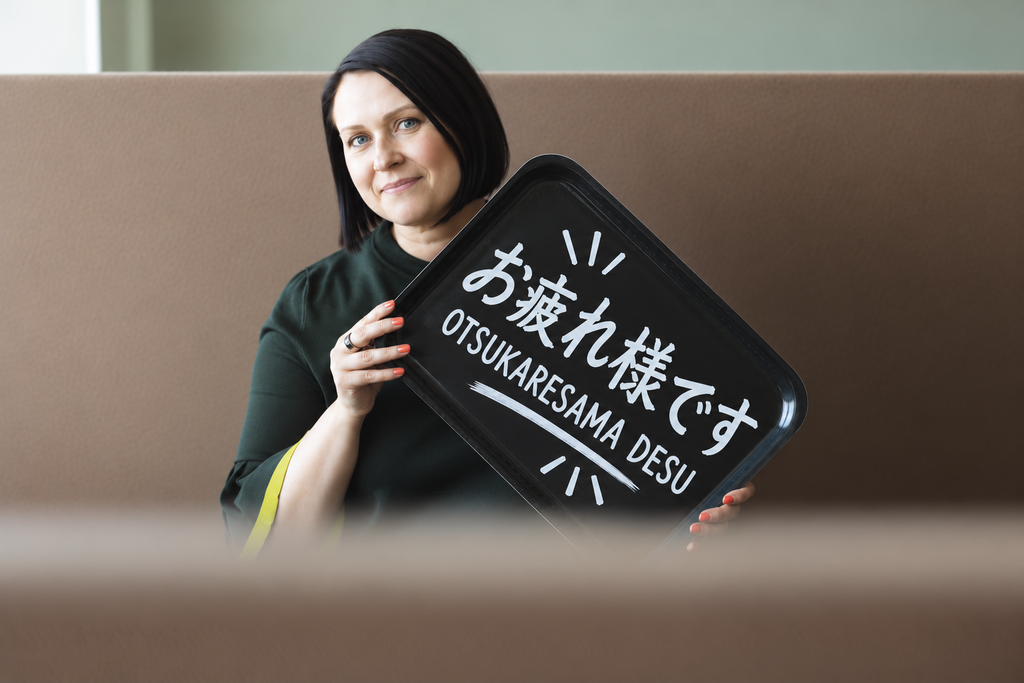
In everyday life at Cefmof, Finnish and Japanese colleagues have adopted words and expressions from each other’s languages. One example is the Japanese phrase otsukaresama desu, which is used when greeting colleagues, arriving at or leaving work, and acknowledging someone’s efforts. There is no exact Finnish equivalent, but the expression conveys appreciation for another person’s work and effort.
VaikutteeThe exchange goes both ways. Japanese colleagues have picked up Finnish expressions such as huomiseen (“see you tomorrow”), kiitos kovasta työstä (“thank you for your hard work”) and the wonderfully versatile no niin. Finnish colleagues, in turn, regularly use Japanese words and phrases, while English expressions sometimes find their way into conversations too. t kulkevat myös toiseen suuntaan. Japanilaiset kollegat ovat omaksuneet suomalaisia ilmauksia, kuten ”huomiseen”, ”kiitos kovasta työstä” ja monikäyttöisen ”no niin”. Suomalaiset puolestaan viljelevät japanilaisia sanoja ja sanontoja, ja joskus keskusteluun päätyy myös englanninkielisiä ilmauksia.
These small exchanges create amusing moments and shared inside jokes that have gradually become part of the team’s own culture.
It’s the little things that bring people together
Vuojolainen says she thoroughly enjoys working in a multicultural team.
“I often learn something new about Japanese culture and ways of working. I can naturally ask a colleague how people in Japan view a particular issue or how they would approach a similar situation. These conversations have broadened my own thinking.”
Arai has also experienced the kindness of Finnish people in everyday life. She recalls occasions when a stranger helped her use a machine at a self-service laundrette or guided her while parking in a tight space.
Adapting to an international workplace is, at its best, a two-way process. New employees need to adapt, but the rest of the team must be willing to learn too. Arai points out that employers should support international employees in settling into life outside the workplace as well.
For Vuojolainen, however, the most important lesson from working in a multicultural team comes down to people.
“Ultimately, what matters most is not where someone comes from or what their cultural background is. What matters far more is who we are as people and how we treat one another in everyday life. That is also what makes a good workplace.”
Text: Suvi Vuojolainen
Photos: Tero Takalo-Eskola
Team photo: Cefmof
