
Winter Mobility
Winter Mobility
Winter Mobility
Overview and objectives
The Winter Mobility Project brings together weather data, maintenance planning and residents’ observations to support winter maintenance in Jyväskylä.
The goal of the project was to improve winter mobility for Jyväskylä residents through more effective use of existing winter maintenance resources.
By connecting information about weather, road conditions and maintenance activities, the project helps supervisors plan operations and allocate resources. It also makes snow ploughing information more accessible to residents and enables route observers to contribute feedback on walking and cycling conditions.
The work focuses on three areas:
- Expanding and connecting data to provide a more comprehensive picture of winter conditions.
- Supporting maintenance decisions with digital tools for operational planning and resource allocation.
- Keeping residents informed through real-time information about snow ploughing.
Actions taken
Bringing data together
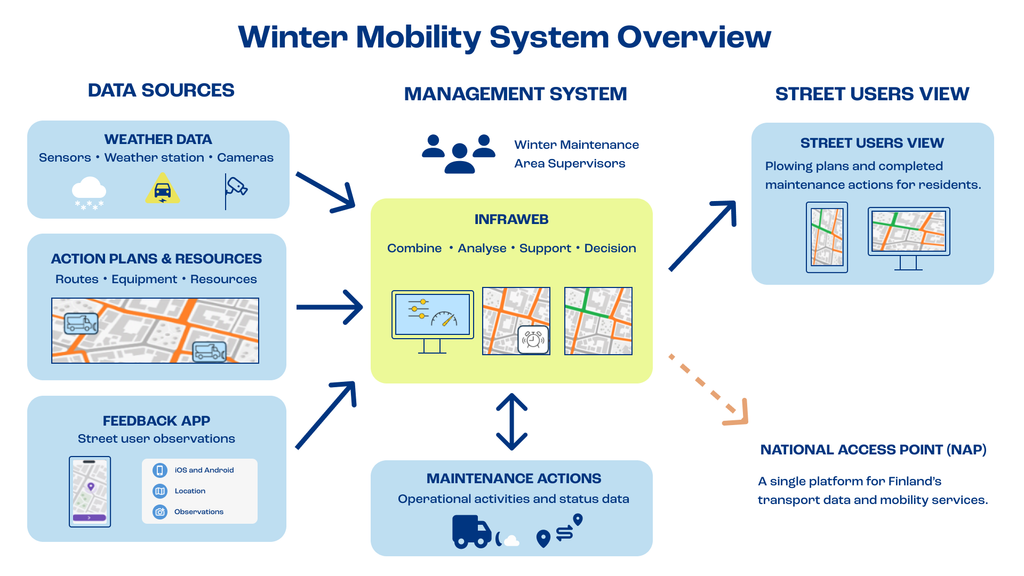
New road weather sensors, weather stations and cameras have been deployed to expand the information available for winter maintenance. Maintenance routes, equipment, resources and requirements have also been digitised.
These sources are brought together in Infraweb, a shared management system that supports winter maintenance supervisors in monitoring conditions and planning operations.
Making maintenance information accessible
A public map on the City of Jyväskylä’s website provides a real-time overview of snow ploughing. Residents can view planned routes and follow the progress of maintenance work.
A short promotional video featuring Finnish TV personality Ernest Lawson has also been produced to raise awareness of the service.
Collecting observations from route users
The Winter Maintenance Feedback App enables registered route observers to assess conditions on pedestrian and cycling routes. They can report ice, slush and snow, as well as examples of well-executed maintenance, using location information and photographs.
These observations complement other data sources and help supervisors identify locations that need attention.
Results and next steps
The project has established a foundation for data-supported winter maintenance in Jyväskylä:
- More connected information: Previously fragmented data sources have been integrated into a shared platform.
- Tools for operational planning: Supervisors have a management system designed to support maintenance planning and resource allocation.
- Greater public visibility: Residents can follow snow ploughing progress through the city’s website.
- Useful feedback from route users: Approximately 180 people registered as route observers for the previous winter season. Maintenance supervisors reported that their observations helped identify problem areas, including locations that might otherwise have been missed during routine inspections.
The project has also highlighted the importance of understanding data quality and its limitations when using information to support decisions.
The next step is to analyse fleet tracking and equipment performance data and explore how AI can help optimise equipment needs, resource allocation and route planning.
Project stakeholders
The project is led by the City of Jyväskylä and supported by Cefmof. It also collaborates with the ProDigial Research Programme and involves multiple parties and suppliers from the infrastructure sector nationwide.
Read more

Hydrogen, Jyväskylä
Hydrogen Refuelling Project
The Jyväskylä hydrogen refuelling project focuses on the development and deployment of a hydrogen refuelling station in Seppälänkangas. The project supports the introduction of hydrogen-powered transport by building practical experience with hydrogen infrastructure ahead of full commercial operations.
The station is currently operating in a pilot phase and is accessible only to designated pilot user groups, such as hydrogen buses and taxis participating in the trial.

Hydrogen, Jyväskylä
Hydrogen-Powered Public Transport Pilot
Jyväskylä has become Finland’s pioneer city for green hydrogen-powered public transport in 2025. As part of this groundbreaking initiative, five Caetano H2 City Gold hydrogen buses have been integrated into the city’s public transportation fleet.
Jyväskylä has become Finland’s pioneer city for green hydrogen-powered public transport in 2025. Five Caetano H2 City Gold hydrogen buses have been integrated into the city’s public transportation fleet.